

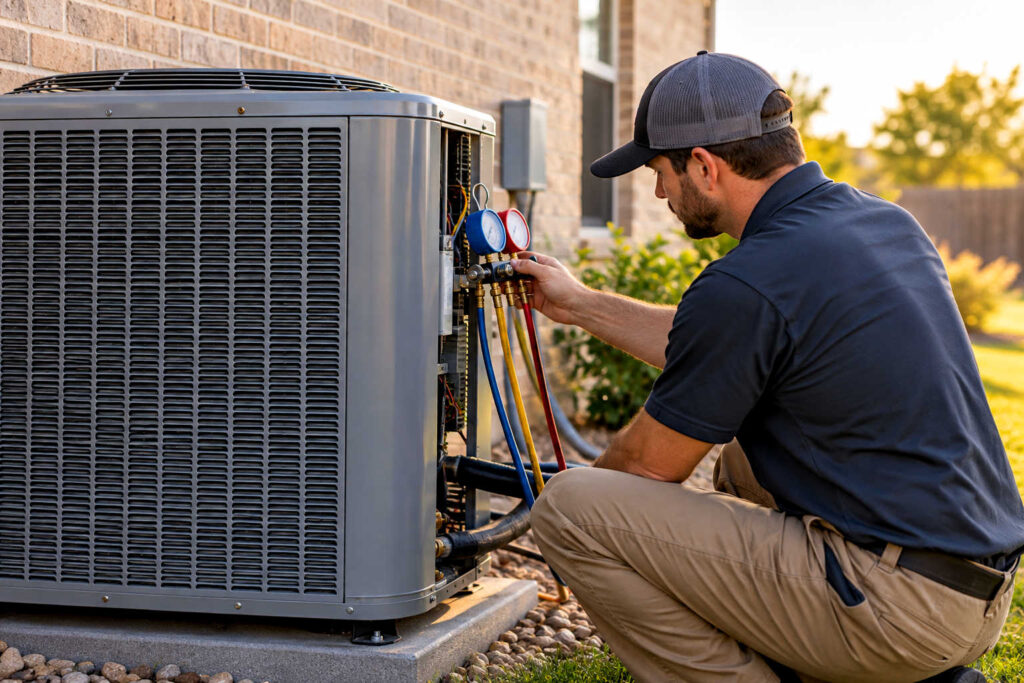
Your heat pump works year-round to keep your Amarillo home comfortable, delivering cool air during scorching Texas summers and reliable warmth when winter temperatures drop. But even a well-maintained heating and cooling system eventually reaches the point where replacement makes more sense than another repair.
Knowing when to replace a heat pump can help you avoid unexpected breakdowns, rising energy bills, and expensive repairs that only temporarily solve the problem.
If your system is getting older, struggling to maintain comfortable temperatures, or requiring frequent service, it may be time to consider an upgrade.
Quick Answer: When Should You Replace a Heat Pump?
Most residential air-source heat pumps last approximately 10 to 15 years, although some operate longer with proper maintenance. If your system is more than 10 years old and experiencing frequent breakdowns, increasing energy costs, or declining performance, it’s worth scheduling a professional evaluation.
According to ENERGY STAR, homeowners should consider replacing heat pumps that are more than 10 years old, particularly when repairs become frequent or energy bills continue to rise.
Age alone doesn’t mean replacement is necessary. The decision should also account for repair costs, equipment condition, efficiency, and your home’s heating and cooling needs.
7 Warning Signs It’s Time to Replace Your Heat Pump
Heat pumps rarely fail without warning. In many cases, performance problems develop gradually, making it important to recognize the early signs of a system approaching the end of its useful life.
1. Your Heat Pump Is More Than 10 to 15 Years Old
Age is one of the most important factors when determining when to replace a heat pump.
As equipment gets older, internal components experience wear, efficiency may decline, and major repairs can become less economical.
A heat pump approaching 15 years of service deserves closer attention, especially if maintenance has been inconsistent or the system has experienced repeated problems.
However, an older heat pump that continues to operate efficiently may not require immediate replacement. A professional inspection can help determine whether the equipment still has useful service life remaining.
2. Your Energy Bills Keep Increasing
Have your heating and cooling bills increased even though your household’s energy usage hasn’t changed significantly?
An aging heat pump may consume more electricity as its performance deteriorates. Dirty coils, restricted airflow, refrigerant problems, and worn components can also affect efficiency.
Before assuming replacement is necessary, compare your utility bills with similar months from previous years and account for changes in electricity rates or weather conditions.
If energy consumption continues increasing despite proper maintenance, upgrading to a more efficient heat pump may help reduce operating costs.
3. Your Heat Pump Needs Frequent Repairs
Occasional HVAC repairs are normal, but repeated service calls can indicate a larger problem.
If you’ve replaced multiple components within a relatively short period, continuing to repair the equipment may become more expensive than investing in a new system.
Major component problems involving compressors, coils, and other costly parts deserve particular attention.
For example, a failing compressor can produce unusual noises, prevent proper heating or cooling, or cause electrical problems. Our guide on how to tell if a heat pump compressor is bad explains common symptoms and why professional testing is important.
Rather than replacing equipment automatically, ask your HVAC technician to compare the estimated repair cost with the system’s remaining useful life.
4. Your Home Has Uneven Heating or Cooling
One room feels comfortable while another is consistently too hot or cold. You adjust the thermostat, but the problem never completely disappears.
Uneven temperatures can sometimes indicate declining heat pump performance.
However, several other issues may cause similar symptoms, including:
Restricted airflow
Leaking or poorly insulated ductwork
Dirty air filters
Incorrect thermostat settings
Improperly sized HVAC equipment
Inadequate home insulation
A professional evaluation can identify whether the problem originates with the heat pump or another part of the heating and cooling system.
If the equipment is aging and no longer has sufficient capacity to meet your home’s needs, replacement may be the most practical solution.
5. Your Heat Pump Makes Unusual Noises
Every heat pump produces some operating noise, but sudden changes deserve attention.
Grinding, rattling, buzzing, squealing, or loud vibrations can indicate mechanical or electrical problems.
Potential causes include worn bearings, loose components, failing motors, and compressor problems.
Not every unusual sound means the entire heat pump needs replacing. Some issues can be corrected with straightforward repairs.
However, persistent mechanical problems in an older system may indicate that major components are approaching the end of their service life.
If your heat pump starts making unfamiliar sounds, arrange an inspection before additional damage occurs.
6. Your Heat Pump Struggles to Maintain Comfortable Temperatures
A properly functioning heat pump should maintain reasonably consistent indoor temperatures under the conditions it was designed to handle.
If your system runs for extended periods without reaching the thermostat setting, several problems may be responsible.
These include refrigerant leaks, airflow restrictions, dirty coils, malfunctioning controls, and failing components.
Keep in mind that modern variable-speed heat pumps are designed to operate for longer periods at lower output levels. Extended operation alone is not necessarily a sign of failure.
The more important question is whether the equipment consistently maintains comfort without excessive energy consumption.
During Amarillo’s cold winter weather, an older heat pump may also struggle to deliver sufficient heating capacity.
A qualified technician can determine whether the system needs repair, maintenance, or replacement.
7. Major Repair Costs Are Approaching the Value of Replacement
Sometimes the clearest warning sign isn’t a mechanical symptom. It’s the price of the next repair.
Replacing an inexpensive component on an otherwise healthy heat pump may be worthwhile.
However, spending thousands of dollars on major repairs to an aging system deserves careful consideration.
Before authorizing an expensive repair, request an estimate for both options.
Compare the cost of repairing the existing equipment with the price of a properly sized replacement system, along with potential efficiency improvements, warranty coverage, and expected remaining service life.
A professional evaluation can help you determine which option offers better long-term value.
How Long Do Heat Pumps Last?
Homeowners frequently ask, “How long do heat pumps last?”
For conventional residential air-source heat pumps, approximately 10 to 15 years is a useful planning range. Some systems last longer, depending on equipment quality, installation, usage, maintenance, and local conditions.
Heat pump lifespan is affected by several factors.
Installation quality: Proper equipment sizing, refrigerant charging, and airflow help prevent unnecessary strain.
Maintenance: Regular filter replacement, coil cleaning, and professional inspections can help protect critical components.
Operating conditions: Extreme temperatures, heavy usage, and outdoor debris can affect system performance.
Equipment quality: Manufacturing quality, design, and component durability influence long-term reliability.
Repair history: Repeated major component failures may indicate that the system is nearing the end of its economical service life.
In Amarillo, heat pumps must handle hot summers, cold winters, blowing dust, and significant seasonal temperature changes.
Regular maintenance is especially important for equipment that provides both heating and cooling throughout the year.
The U.S. Department of Energy’s heat pump guide provides additional information about heat pump technology and efficiency.
Heat Pump Replacement Cost: What Should Amarillo Homeowners Expect?
Heat pump replacement cost is an important consideration when deciding whether to upgrade an aging system.
There isn’t one reliable price that applies to every Amarillo home. The total cost depends on the equipment selected, installation requirements, and the condition of the existing HVAC system.
Several factors influence the final estimate.
Heat Pump Size and Capacity
Larger homes may require systems with greater heating and cooling capacity, but square footage alone doesn’t determine the correct equipment size.
A professional load calculation considers insulation, windows, air leakage, home layout, and other characteristics.
System Efficiency
Higher-efficiency models typically cost more upfront but may offer lower operating expenses.
Modern equipment is rated using efficiency measurements such as SEER2 for cooling and HSPF2 for heating.
Existing Ductwork
If the home’s ductwork is in good condition and properly sized, replacement may require fewer modifications.
Leaking, damaged, or undersized ducts can increase installation costs.
Installation Complexity
Electrical upgrades, equipment accessibility, required modifications, and the type of heat pump being installed can affect labor and material costs.
Additional Equipment
Thermostats, air handlers, backup heating equipment, and other system components may need to be replaced or upgraded.
Quick Answer: How Much Does a New Heat Pump Cost?
The cost of a new heat pump depends on system capacity, efficiency, installation requirements, and whether additional HVAC components need replacement.
The most reliable approach is to request a detailed estimate based on your home’s specific heating and cooling requirements.
Caprock Services Heating & Air provides professional heat pump installation and repair in Amarillo, TX and surrounding communities.
Should You Repair or Replace Your Heat Pump?
Not every aging or malfunctioning heat pump needs to be replaced.
In many cases, an affordable repair can restore reliable operation and extend the equipment’s useful life.
The decision becomes more complicated when an older system requires extensive work or continues experiencing recurring problems.
Here’s a practical comparison.
| Consider Repairing Your Heat Pump When | Consider Replacing Your Heat Pump When |
|---|---|
| The system is relatively new. | The system is approaching or beyond its expected lifespan. |
| The problem involves an inexpensive component. | A major component has failed. |
| Repairs have been infrequent. | Breakdowns and repair expenses are becoming frequent. |
| Energy efficiency remains acceptable. | Energy consumption is rising because of declining equipment performance. |
| The equipment maintains comfortable temperatures. | Comfort problems persist despite appropriate repairs and maintenance. |
| The system has a reasonable amount of useful life remaining. | Replacement offers better long-term value than continued repairs. |
There is no universal rule that determines whether repair or replacement is always the better option.
A qualified HVAC contractor should inspect the equipment, identify the underlying problem, and explain both options before recommending a major investment.
How Amarillo’s Climate Affects Heat Pump Performance
Living in the Texas Panhandle presents unique heating and cooling challenges.
Amarillo homeowners experience hot summer afternoons, freezing winter temperatures, strong winds, and periods of blowing dust.
Because heat pumps provide both heating and cooling, they may operate extensively throughout the year.
Several local conditions deserve attention.
Summer heat: Extended cooling demand can increase operating hours and place additional demands on aging equipment.
Winter temperatures: Heat pump heating capacity and efficiency vary with outdoor conditions. Proper system selection and backup heating design are important for cold weather performance.
Dust and debris: Airborne debris can accumulate around outdoor equipment, potentially restricting airflow and reducing efficiency.
Temperature fluctuations: Rapid weather changes make reliable thermostat controls and properly functioning equipment especially important.
These conditions don’t automatically shorten every heat pump’s lifespan, but they highlight the importance of correct installation and preventive maintenance.
Before replacing your system, consider scheduling a professional evaluation through Caprock’s heating service and repair team.
What to Expect When Replacing Your Heat Pump
Replacing a heat pump involves more than disconnecting the old equipment and installing a new outdoor unit.
A professional replacement should begin with an assessment of your home’s heating and cooling requirements.
The process typically includes:
Evaluating the existing system, including its age, repair history, and performance.
Calculating the home’s heating and cooling loads to determine appropriate equipment capacity.
Inspecting ductwork, airflow, electrical requirements, and system compatibility.
Reviewing replacement options, efficiency ratings, and installation costs.
Installing and testing the selected equipment according to manufacturer requirements.
Explaining operating settings, maintenance recommendations, and warranty information.
Proper installation is essential for achieving the comfort and efficiency benefits of modern heat pump technology.
ENERGY STAR also recommends evaluating ductwork and air leaks before investing in new heating and cooling equipment because these problems can affect performance even after replacement.
Frequently Asked Questions About Heat Pump Replacement
How Do I Know When to Replace a Heat Pump?
Consider replacement when your heat pump is more than 10 to 15 years old and experiencing frequent repairs, declining efficiency, or persistent comfort problems. A professional inspection can help determine whether replacement is necessary.
Is It Worth Replacing a 15-Year-Old Heat Pump?
A 15-year-old heat pump may be a good candidate for replacement, especially if major repairs are needed or energy consumption has increased. However, age alone doesn’t determine whether replacement is necessary. A reliable system with acceptable efficiency may still have useful life remaining.
Can a Heat Pump Last 20 Years?
Yes. Some heat pumps can operate for 20 years or longer, but that isn’t guaranteed. Actual lifespan depends on installation quality, maintenance, equipment condition, climate, and operating demands.
Is It Better to Repair or Replace a Heat Pump?
Repair is often preferable when the equipment is relatively new and the problem is inexpensive to correct. Replacement becomes more attractive when the system is older, requires major repairs, or has recurring efficiency and reliability problems.
Will a New Heat Pump Lower My Energy Bills?
A new, properly sized, high-efficiency heat pump may reduce heating and cooling energy consumption compared with an aging or inefficient system. Actual savings depend on equipment efficiency, installation quality, home insulation, energy prices, and usage habits.
Should I Replace My Heat Pump Before It Stops Working?
If your heat pump is aging and showing signs of declining reliability, replacing it before a complete failure may help you avoid an emergency installation and give you more time to compare equipment options and costs.
Get Expert Help Deciding When to Replace Your Heat Pump in Amarillo, TX
Deciding when to replace a heat pump doesn’t have to involve guesswork.
If your system is getting older, struggling to maintain comfortable temperatures, or requiring increasingly expensive repairs, Caprock Services Heating & Air can help you evaluate your options.
Our team provides professional heat pump diagnostics, repairs, and installations for homeowners in Amarillo, Bushland, Canyon, Claude, and surrounding Texas Panhandle communities.
We’ll help you understand your existing system’s condition and determine whether repair or replacement makes the most sense for your comfort and budget.
Ready to find out whether your heat pump needs replacing?
Schedule an HVAC service appointment or call 806-646-4822 to speak with Caprock Services Heating & Air.