

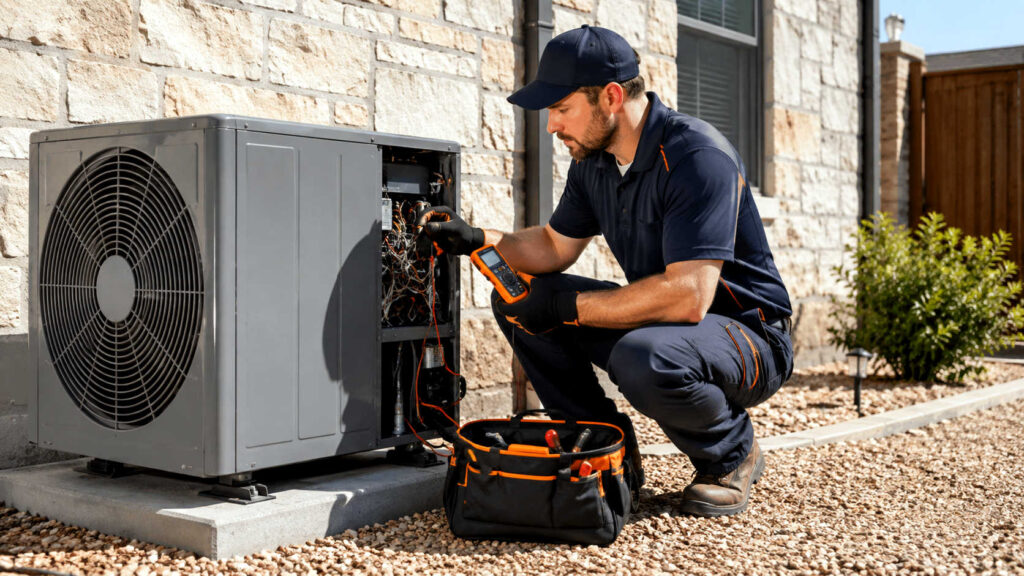
If your heat pump suddenly stops heating or cooling properly, the compressor may be one possible cause. The compressor is responsible for circulating refrigerant through the system so your heat pump can move heat into or out of your home. When it begins to fail, the system may lose capacity, stop operating normally, or show electrical and mechanical warning signs.
If you are wondering how to tell if heat pump compressor is bad, there are several symptoms worth watching for. Some point directly toward compressor trouble, while others can also be caused by airflow, electrical, thermostat, or refrigerant problems. That is why professional diagnosis matters before assuming the compressor itself has failed.
Caprock Services Heating & Air provides heat pump repair in Amarillo, TX and can inspect the system, identify the source of the problem, and explain whether repair or replacement is the better option.
Common Heat Pump Bad Compressor Symptoms
Some of the most common heat pump bad compressor symptoms include loss of heating or cooling, repeated breaker trips, unusual outdoor-unit noises, difficulty starting, or a compressor that does not turn on at all.
A failing compressor may also cause the heat pump to run longer than normal, cycle improperly, or struggle to maintain the thermostat setting.
Because several HVAC problems can create similar symptoms, these warning signs should be viewed as reasons to schedule an inspection rather than proof that the compressor has failed.
Heat Pump Compressor Not Turning On
A heat pump compressor not turning on is one of the clearest signs that something is wrong with the outdoor unit.
Possible causes include:
Electrical problems
A failed capacitor
A contactor problem
Thermostat or control issues
Wiring problems
A safety switch interruption
A compressor that has overheated
Internal compressor failure
If the outdoor fan runs but the compressor does not start, or if the entire outdoor unit remains inactive, a technician can test the electrical components and determine whether the compressor itself is responsible.
Because the compressor operates on high voltage, homeowners should not open the unit or attempt electrical repairs themselves.
Heat Pump Breaker Keeps Tripping
If your heat pump breaker keeps tripping, the system may be drawing more electrical current than it should.
A failing compressor can sometimes cause this by struggling to start or by developing an internal electrical fault. However, repeated breaker trips can also be caused by damaged wiring, a failing motor, a bad capacitor, or another electrical problem.
Resetting the breaker once may be reasonable if there was an isolated interruption. If it trips again, do not continue resetting it repeatedly.
Repeated breaker trips are a sign that the system needs professional diagnosis because electrical problems can create a safety risk and may damage additional components.
Heat Pump Not Heating
A heat pump not heating properly does not automatically mean the compressor is bad, but compressor trouble is one possible cause.
If the compressor is unable to circulate refrigerant effectively, the system may not transfer enough heat into the home. You may notice:
Cool or lukewarm air from the vents
Long heating cycles
Difficulty reaching the thermostat setting
The outdoor unit running without producing enough heat
Higher energy use
Before assuming compressor failure, check that the thermostat is set correctly and that the air filter is clean. If the system still does not heat properly, a technician should inspect the compressor, refrigerant circuit, reversing valve, airflow, and electrical components.
Heat Pump Not Cooling
The same compressor that supports heating also plays a central role in cooling.
If your heat pump is not cooling, the compressor may not be circulating refrigerant properly. Other causes may include dirty coils, low refrigerant, airflow restrictions, thermostat problems, or electrical issues.
A heat pump that runs continuously without lowering the indoor temperature should be inspected before the problem gets worse.
Heat Pump Not Blowing Warm Air
A heat pump not blowing warm air during heating mode can be frustrating, especially during an Amarillo cold front.
In normal operation, heat pumps often produce air that feels less hot than air from a gas furnace, so mildly warm air is not necessarily a problem.
However, if the air feels consistently cold and the home is not warming, the system may have a compressor, refrigerant, reversing valve, defrost, or airflow issue.
Professional testing can help separate normal heat pump operation from an actual mechanical problem.
Learn more about heating service and repair.
Heat Pump Blowing Cold Air in Heat Mode
A heat pump blowing cold air in heat mode can sometimes be normal during a defrost cycle, but it should not continue for long periods.
During defrost, the system temporarily changes operation to remove ice from the outdoor coil. If cold air continues well beyond that cycle, there may be a problem with the compressor, reversing valve, thermostat, refrigerant level, or auxiliary heat.
Persistent cold-air complaints are a good reason to schedule heat pump service.
Loud or Unusual Compressor Noises
A healthy heat pump compressor normally produces a steady hum or low operating sound.
Warning noises may include:
Buzzing
Banging
Clanking
Grinding
Screeching
Hard-starting sounds
A loud buzzing compressor may be struggling electrically, while banging or grinding may point to internal mechanical damage.
Unusual noises do not always mean the compressor needs replacement, but they should not be ignored.
Compressor Starts and Stops Repeatedly
A failing compressor may sometimes contribute to short cycling, where the heat pump starts and stops more often than normal.
Possible causes include:
Overheating
Electrical problems
Pressure problems
A failing capacitor
Refrigerant issues
Control problems
Thermostat problems
Short cycling creates extra wear because the compressor experiences its greatest electrical and mechanical stress during startup.
If the heat pump repeatedly cycles every few minutes, a professional diagnosis can help determine whether the compressor or another component is responsible.
Frozen Coils or Refrigerant Problems
A compressor that is not circulating refrigerant properly can contribute to poor heat transfer, but frozen coils do not automatically mean the compressor is bad.
Ice may also form because of:
Restricted airflow
A dirty air filter
Dirty coils
Low refrigerant
A refrigerant leak
A defrost problem
Outdoor weather conditions
If the system develops heavy or persistent ice and performance drops, avoid trying to chip the ice away. A technician can determine whether the problem involves refrigerant, airflow, defrost controls, or the compressor.
How Do I Know If My Outside Heat Pump Compressor Is Bad During Cold Weather?
Cold weather can make compressor diagnosis more complicated because heat pumps operate differently as outdoor temperatures fall.
Some frost on the outdoor coil is normal, and the unit may occasionally enter defrost mode. That behavior alone does not mean the compressor is failing.
Signs that may justify professional inspection include:
The outdoor unit repeatedly fails to start
The compressor makes unusual noises
The breaker trips repeatedly
The heat pump cannot maintain the thermostat setting
Cold air continues blowing outside normal defrost cycles
The system develops persistent or excessive ice
The compressor repeatedly attempts to start but shuts down
A technician can determine whether the issue involves normal cold-weather operation, defrost controls, refrigerant, electrical components, or an actual compressor problem.
What Else Can Mimic a Bad Heat Pump Compressor?
Because compressor replacement can be one of the more expensive heat pump repairs, proper diagnosis is especially important before making a major repair decision. ENERGY STAR also recommends professional HVAC maintenance that includes checking electrical connections, refrigerant levels, airflow, and system controls.
Several problems can look like compressor failure even when the compressor itself is still functional.
These include:
A bad capacitor
A failed contactor
Loose or damaged wiring
Thermostat problems
Low refrigerant
A refrigerant leak
Dirty coils
Restricted airflow
A failing fan motor
A reversing valve problem
Defrost-control problems
Because compressor replacement can be one of the more expensive heat pump repairs, proper diagnosis is especially important before making a major repair decision.
Heat Pump Compressor Repair or Replacement
Not every compressor problem means the entire heat pump must be replaced.
Whether heat pump compressor replacement makes sense depends on:
The age of the system
The condition of the indoor and outdoor equipment
Warranty coverage
The type of compressor failure
The cost of the repair
Previous repair history
Overall system efficiency
The expected remaining life of the heat pump
For a relatively new system with warranty coverage, replacing the compressor may be reasonable. For an older heat pump with multiple problems, full system replacement may provide better long-term value.
Heat Pump Compressor Replacement Cost
Heat pump compressor replacement cost can vary significantly based on the equipment, compressor type, refrigerant, labor requirements, warranty status, and whether other components also need repair.
Because those factors differ from one system to another, an on-site diagnosis is the best way to determine the actual repair cost.
Caprock Services can inspect the system and explain the available options before you decide whether compressor replacement or another solution makes sense.
Can You Keep Running a Heat Pump With a Bad Compressor?
If the system is making severe noises, repeatedly tripping the breaker, producing a burning or electrical smell, or failing to operate normally, it is better to shut the system off and schedule professional service.
Continuing to run a system with an electrical or mechanical failure can potentially cause additional damage.
If the system simply is not heating or cooling well but no immediate safety issue is present, a technician can evaluate the problem and recommend the next step.
Frequently Asked Questions About Heat Pump Compressor Problems
How can I tell if my heat pump compressor is bad?
Possible signs of a bad heat pump compressor include the compressor not turning on, repeated breaker trips, unusual outdoor-unit noises, poor heating or cooling, difficulty starting, or a system that runs without maintaining the thermostat setting. Because electrical, refrigerant, airflow, and control problems can create similar symptoms, professional testing is the best way to confirm compressor failure.
Why is my heat pump compressor not turning on?
A heat pump compressor may fail to start because of a bad capacitor, contactor problem, thermostat or control issue, damaged wiring, overheating, a safety interruption, or internal compressor failure. A technician can test the electrical components and compressor to determine the actual cause.
Why does my heat pump breaker keep tripping?
A heat pump breaker may repeatedly trip if the system is drawing excessive electrical current. Possible causes include compressor problems, damaged wiring, a failing capacitor, motor trouble, or another electrical fault. If the breaker trips again after being reset once, the system should be professionally inspected rather than repeatedly reset.
Can a bad compressor cause a heat pump not to heat or cool?
Yes. The compressor circulates refrigerant through the heat pump, so a failing compressor can prevent the system from transferring heat properly. However, poor heating or cooling can also be caused by low refrigerant, dirty coils, airflow restrictions, thermostat problems, or other components.
Is cold air from a heat pump always a sign of a bad compressor?
No. A heat pump may temporarily blow cooler air during a normal defrost cycle, and heat pump supply air often feels less hot than air from a gas furnace. Persistent cold air combined with poor heating performance may indicate a compressor, refrigerant, reversing valve, thermostat, or defrost problem.
What noises can indicate a bad heat pump compressor?
Buzzing, banging, grinding, clanking, screeching, or unusually hard starting can indicate compressor or electrical problems. Different noises can have different causes, so unusual sounds should be diagnosed before assuming the compressor needs replacement.
Should I replace the compressor or the entire heat pump?
The decision depends on the age and condition of the system, warranty coverage, the type of compressor failure, repair cost, efficiency, previous repair history, and the expected remaining life of the equipment. A newer system may justify compressor replacement, while full system replacement may make more sense for older equipment with multiple problems.
Who repairs heat pump compressors in Amarillo, TX?
Caprock Services Heating & Air provides heat pump diagnosis and repair in Amarillo, TX and surrounding Texas Panhandle communities. Technicians can determine whether the problem involves the compressor or another heat pump component and explain the available repair or replacement options.
Schedule Heat Pump Repair in Amarillo, TX
If you are trying to determine how to tell if heat pump compressor is bad, the symptoms can provide useful clues, but they cannot replace professional testing.
A heat pump that will not start, repeatedly trips the breaker, fails to heat or cool, makes unusual noises, or struggles during cold weather may have a compressor problem or another issue that produces similar symptoms.
Caprock Services Heating & Air provides professional heat pump repair in Amarillo, TX. Our technicians can diagnose the system, explain what is causing the problem, and help you decide whether repair, compressor replacement, or full heat pump replacement is the better option.
Contact Caprock Services Heating & Air to schedule heat pump service in Amarillo and surrounding Texas Panhandle communities. For faster service call 806-646-4822.