

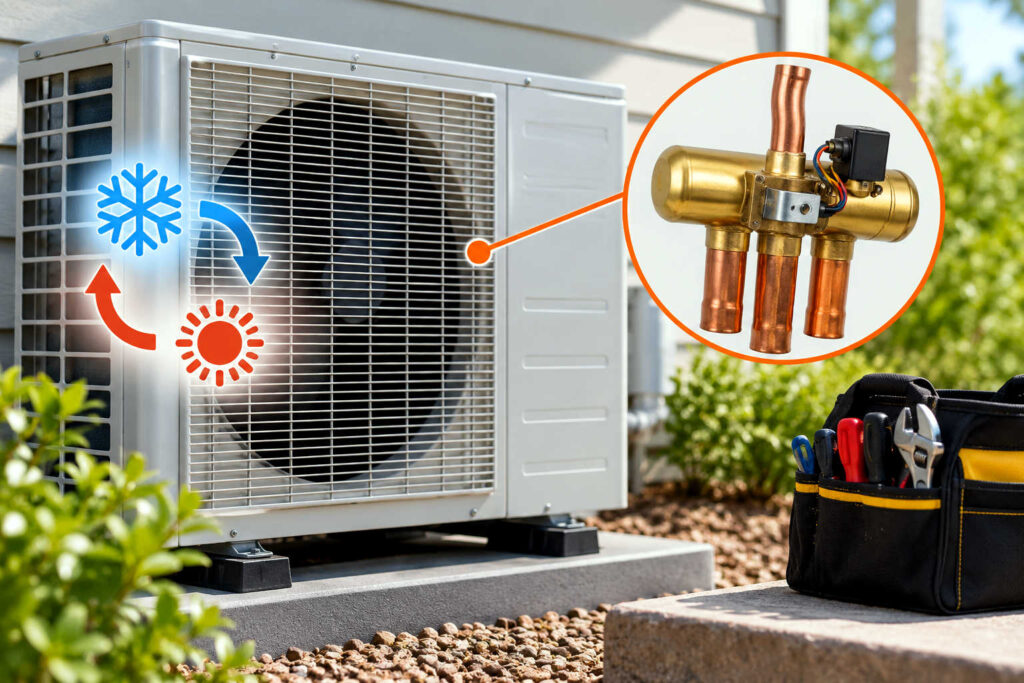
If you have ever wanted to know how to tell if you have a faulty heat pump reversing valve, here’s how you can tell. A heat pump is designed to provide both heating and cooling by changing the direction refrigerant moves through the system. The component responsible for that change is the heat pump reversing valve.
For homeowners in Amarillo and the surrounding area, a reversing valve problem can affect comfort in both hot and cold weather. When the valve begins to fail, your heat pump may become stuck in heating or cooling mode, struggle to maintain a comfortable temperature, or develop other performance problems.
Some reversing valve problems can look similar to thermostat, refrigerant, electrical, or compressor issues, which is why professional diagnosis is important before replacing any components.
What Does a Reversing Valve Do on a Heat Pump?
A heat pump reversing valve controls the direction refrigerant flows through the system.
During cooling mode, the heat pump removes heat from inside your home and transfers it outdoors. During heating mode, the process is reversed so the system can collect heat from outside and move it indoors. ENERGY STAR explains how air-source heat pumps work to provide both heating and cooling by transferring heat rather than creating it directly.
The reversing valve allows the system to switch between these two operating modes.
When the valve operates correctly, the transition between heating and cooling should happen automatically when your thermostat calls for a different mode. If the valve becomes stuck, damaged, or unable to shift properly, the heat pump may no longer be able to change modes.
Signs of a Faulty Heat Pump Reversing Valve
A faulty reversing valve can produce several symptoms. Some are fairly obvious, while others may resemble problems elsewhere in the HVAC system.
Your Heat Pump Will Not Switch Between Heating and Cooling
One of the clearest signs of a reversing valve problem is a heat pump that works in one mode but refuses to switch to the other.
For example, your system may cool normally during warm weather but continue producing cool air after you switch the thermostat to heat.
The opposite can also happen. A heat pump may remain in heating mode even when cooling is selected.
Because the reversing valve is responsible for changing the refrigerant flow direction, a valve that cannot shift can leave the system stuck in one operating mode.
The Heat Pump Is Running but the Air Temperature Is Wrong
If your thermostat is set correctly but the air coming from the vents does not match the selected mode, the reversing valve may not be changing position properly.
A system set to heat may blow cool or lukewarm air, while a system set to cool may produce warmer air than expected.
This does not automatically mean the reversing valve has failed. Thermostat problems, refrigerant issues, electrical faults, and other heat pump problems can create similar symptoms.
Your Heat Pump Struggles to Heat or Cool the Home
A reversing valve does not always fail completely.
In some cases, the valve may shift only partially or refrigerant may leak internally through the valve. When that happens, your heat pump may continue operating but lose heating or cooling capacity.
You may notice longer run times, uneven temperatures, or a system that never seems to reach the thermostat setting.
You Hear Unusual Noises From the Heat Pump
Heat pumps make normal operating sounds, especially when switching modes or entering a defrost cycle.
However, unusual hissing, rattling, or other noises near the reversing valve may indicate a mechanical or refrigerant-related problem.
Because several HVAC components can produce similar noises, the sound alone is not enough to confirm a faulty reversing valve.
Your Energy Bills Increase Unexpectedly
A heat pump with a reversing valve problem may have to run longer to maintain the desired indoor temperature.
Longer operating cycles can increase electricity consumption and may cause an unexpected rise in utility costs.
If your energy usage increases without a major change in weather or thermostat settings, reduced heat pump efficiency should be investigated. Routine HVAC maintenance can also help identify developing heat pump problems before they lead to larger repairs.
How Do HVAC Technicians Test a Reversing Valve on a Heat Pump?
Testing a reversing valve involves determining whether the valve itself is defective or whether another component is preventing it from operating correctly.
An HVAC technician may check the thermostat signal, electrical connections, reversing valve solenoid, refrigerant temperatures and pressures, and the valve’s response when the heat pump changes operating modes.
This distinction is important because a heat pump that will not switch between heating and cooling does not necessarily need a new reversing valve.
The problem could involve the thermostat, wiring, solenoid coil, refrigerant charge, control board, or another component.
Professional testing helps identify the actual cause before an expensive repair is recommended.
Can You Unstick a Heat Pump Reversing Valve?
A reversing valve can sometimes become mechanically stuck rather than completely fail.
However, homeowners generally should not attempt to unstick a heat pump reversing valve themselves. The valve is part of the sealed refrigerant system, and diagnosing or repairing it may require specialized HVAC tools and refrigerant-handling procedures.
A technician can determine whether the problem involves the valve body, solenoid, electrical controls, refrigerant pressures, or another issue.
In some situations, correcting an electrical or control problem may restore normal operation without replacing the valve itself.
When Is Heat Pump Reversing Valve Replacement Necessary?
Heat pump reversing valve replacement may be necessary when the valve is mechanically damaged, leaking internally, or unable to shift after other causes have been ruled out. A professional heat pump repair technician can determine whether the reversing valve or another component is responsible.
Replacing a reversing valve is more involved than replacing many external HVAC components because the valve is connected directly to the refrigerant lines.
The repair typically requires a qualified technician to recover refrigerant, remove the existing valve, install the replacement, properly evacuate the refrigerant circuit, and recharge the system according to manufacturer specifications.
Because of the labor involved, technicians should confirm that the reversing valve is actually responsible for the problem before replacement begins.
Does a Faulty Reversing Valve Mean You Need a New Heat Pump?
Not necessarily.
A failed reversing valve is a repairable problem, and replacing the entire heat pump may not be necessary if the rest of the system is in good condition.
The decision usually depends on factors such as:
The age of the heat pump
The overall condition of the system
The cost of the reversing valve repair
Whether other major components are also failing
The efficiency of the existing equipment
The cost difference between repairing and replacing the system
For a newer heat pump in otherwise good condition, repairing the reversing valve may make sense. For an older system with additional problems, replacement may be worth considering.
Frequently Asked Questions About Heat Pump Reversing Valves
What are the symptoms of a faulty heat pump reversing valve?
Common symptoms include a heat pump that will not switch between heating and cooling, air coming from the vents at the wrong temperature, longer run times, reduced heating or cooling performance, and unusual noises near the outdoor unit.
How do you test a reversing valve on a heat pump?
An HVAC technician may test the thermostat signal, solenoid coil, electrical connections, refrigerant pressures, and temperature changes across the system. The goal is to determine whether the valve itself is faulty or whether another electrical or refrigerant problem is preventing it from shifting properly.
Can a heat pump reversing valve get stuck?
Yes. A reversing valve can sometimes become stuck and remain in either heating or cooling mode. However, similar symptoms can also be caused by thermostat problems, wiring issues, refrigerant problems, or a failed solenoid, so proper diagnosis is important.
Can you unstick a heat pump reversing valve?
In some cases, a stuck reversing valve may be restored without replacement, but this is generally not a homeowner repair. Because the valve is part of the refrigerant circuit, diagnosis and repair should be handled by a qualified HVAC technician.
How much does heat pump reversing valve replacement involve?
Replacing a heat pump reversing valve is a more involved repair because the valve is connected to the refrigerant lines. The technician may need to recover the refrigerant, remove and replace the valve, evacuate the system, and recharge it according to manufacturer specifications.
Does a bad reversing valve mean I need a new heat pump?
Not necessarily. A faulty reversing valve can often be repaired or replaced without replacing the entire heat pump. Whether repair or replacement makes more sense depends on the age of the system, its overall condition, the cost of the repair, and whether other major components are also failing.
Why is my heat pump stuck in heating or cooling mode?
A stuck reversing valve is one possible cause, but it is not the only one. Thermostat problems, electrical issues, low refrigerant, control board faults, and solenoid problems can produce similar symptoms. A professional inspection can help identify the actual cause.
Get Help Diagnosing a Faulty Heat Pump Reversing Valve
If your heat pump will not switch between heating and cooling, is struggling to maintain the right temperature, or is showing other signs of a possible reversing valve problem, professional diagnosis can help determine the cause.
Caprock Services Heating & Air can inspect your heat pump, determine whether the heat pump reversing valve is actually faulty, and explain the repair options available.
Identifying the problem correctly is especially important because several heat pump issues can create similar symptoms.
If you are having heat pump problems in Amarillo or a nearby Texas Panhandle community, schedule HVAC service with Caprock Services Heating & Air.