

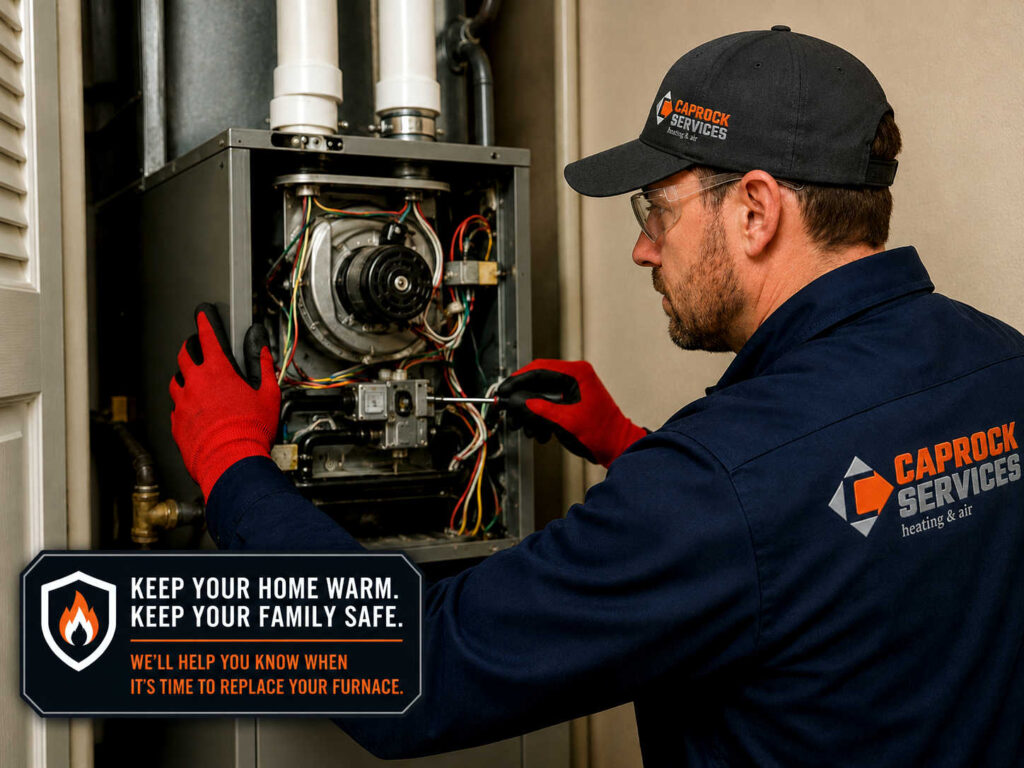
If you are wondering when to replace a furnace, the answer depends on more than age alone. A furnace may still be worth repairing if it is relatively young and otherwise reliable, while an older system with frequent breakdowns, declining efficiency, or serious safety concerns may be a better candidate for replacement.
For homeowners in Bushland, TX, reliable heating matters when winter temperatures drop across the Texas Panhandle. Knowing the warning signs of a failing furnace can help you avoid repeated repair bills, unexpected loss of heat, and potentially unsafe operating conditions.
Caprock Services Heating & Air can inspect your heating system, explain what is causing the problem, and help you decide whether furnace repair or replacement makes more sense.
Caprock’s heating service and repair page covers furnace diagnostics, repairs, replacement, maintenance, and installation across Bushland and nearby communities.
How Long Does a Furnace Last?
If you are asking how long does a furnace last, many furnaces operate for roughly 15 to 20 years when they are properly installed and maintained.
That does not mean every furnace should automatically be replaced at 15 years, nor does it mean every system will make it to 20 years without major repairs. The average life of a furnace depends on several factors, including:
Installation quality
Maintenance history
How often the furnace operates
Condition of major components
Airflow and filtration
Equipment sizing
Previous repairs
Overall operating conditions
A well-maintained furnace may continue performing reliably beyond the average range, while a poorly maintained or heavily used system may begin showing problems much sooner.
Age Is One of the Biggest Replacement Factors
An old furnace is not automatically a bad furnace, but age becomes increasingly important when combined with other problems.
As furnaces get older, components wear out, efficiency may decline, and the chance of additional repairs can increase. Replacement becomes more reasonable when an aging system begins requiring frequent service or can no longer heat the home consistently.
If your furnace is approaching 15 to 20 years old, it is a good time to start discussing replacement options before an emergency forces the decision.
ENERGY STAR also identifies older equipment, frequent repairs, rising energy bills, and uneven comfort as signs that it may be time to replace heating equipment.
Frequent Furnace Repairs
One of the clearest signs that replacement may be approaching is repeated breakdowns.
A single repair does not necessarily mean you need a new furnace. However, if technicians are being called several times over a relatively short period, continuing to repair the system may become less economical.
Frequent repairs can also indicate that multiple components are reaching the end of their useful life.
When deciding whether to continue repairing the equipment, consider:
How much you have spent on recent repairs
How often problems are occurring
The age of the furnace
Whether major components are beginning to fail
Whether the furnace still heats the home consistently
How likely another repair may be in the near future
These factors can help answer the common question of furnace repair or replace.
Furnace Short Cycling
Furnace short cycling happens when the heating system turns on and off repeatedly without completing a normal heating cycle.
Short cycling can be caused by several problems, including:
Dirty air filters
Restricted airflow
Thermostat issues
Overheating
Equipment sizing problems
Flame-sensing issues
Mechanical or electrical faults
Short cycling does not automatically mean the furnace needs to be replaced. In many cases, the underlying cause can be repaired.
However, if an older furnace continues short cycling despite proper service, or if short cycling is connected to more serious equipment deterioration, replacement may become the better long-term option.
Furnace Rust and Corrosion
Furnace rust can be an important warning sign because furnaces contain metal components that can deteriorate over time.
Small amounts of surface corrosion in certain areas do not always mean immediate replacement is necessary. Extensive rust, however, may indicate moisture problems, age-related deterioration, or damage to important components.
Pay particular attention to rust around:
The furnace cabinet
Flue or vent connections
Burner assemblies
Heat exchanger areas
Drainage components
Internal metal surfaces
Rust should be professionally evaluated because the location and severity of corrosion matter more than appearance alone.
Cracked Heat Exchanger
A cracked heat exchanger is one of the most serious furnace problems.
The heat exchanger separates combustion gases from the air that circulates through your home. If the heat exchanger develops a crack or serious deterioration, combustion gases may escape into areas where they should not be.
That creates a potential safety concern involving carbon monoxide from the furnace.
Warning signs that may warrant professional inspection include:
Unusual burner flame behavior
Soot or discoloration around the furnace
Repeated shutdowns
Strong or unusual odors
Visible corrosion or cracking
Carbon monoxide detector alerts
A cracked heat exchanger is not a DIY repair issue. If a technician confirms serious heat exchanger damage, replacement may be recommended depending on the age and condition of the furnace.
Carbon Monoxide Concerns
Carbon monoxide is colorless and odorless, which makes working carbon monoxide detectors especially important in homes with fuel-burning equipment.
If a carbon monoxide detector activates, leave the affected area and follow appropriate emergency guidance rather than continuing to operate the furnace.
A furnace inspection can help identify combustion, venting, or heat exchanger problems that may create unsafe conditions.
Safety concerns should always carry more weight than short-term repair savings when deciding whether to replace heating equipment.
Rising Heating Bills
Higher energy bills can also be a sign that a furnace is losing efficiency.
As components wear, airflow becomes restricted, or combustion performance declines, the furnace may need to operate longer to maintain the same indoor temperature.
Reduced furnace efficiency may show up as:
Longer heating cycles
More frequent operation
Uneven temperatures
Difficulty reaching the thermostat setting
Higher heating bills without a major change in weather or usage
A single high utility bill does not prove that the furnace needs replacement. However, consistent increases combined with declining comfort and older equipment can strengthen the case for HVAC replacement.
Uneven Heating or Trouble Keeping the Home Warm
A furnace that once heated the home evenly but now leaves some rooms noticeably colder may be struggling to meet normal demand.
Possible causes include:
Airflow restrictions
Duct problems
Blower issues
Thermostat problems
Dirty components
Equipment deterioration
Improper system sizing
Not every comfort problem requires a heating system replacement, so professional diagnosis matters.
If the furnace itself is aging and no longer capable of delivering consistent heat even after repairs and airflow problems have been addressed, replacement may be the better solution.
Strange Furnace Noises
New or worsening noises can indicate mechanical problems.
Pay attention to:
Banging
Grinding
Squealing
Rattling
Booming
Buzzing
Repeated clicking
Some noises may come from relatively simple repair issues. Others may indicate worn motors, damaged bearings, loose components, ignition problems, or deteriorating equipment.
If an older furnace begins making several new noises while also showing other performance problems, it may be approaching the end of its useful life.
When Furnace Replacement Cost Becomes a Factor
Furnace replacement cost is naturally one of the biggest concerns for homeowners deciding whether to keep repairing an older system.
The better comparison is not simply repair cost versus replacement cost. It is the cost of the repair compared with:
The age of the furnace
The condition of the rest of the system
Recent repair expenses
Likely future repairs
Current efficiency
Comfort performance
Expected remaining life
A lower-cost repair may make sense on a younger furnace in otherwise good condition. The same repair may make less sense on an older furnace that has already required several service calls.
Repair or Replace the Furnace?
When deciding whether to repair or replace a furnace, ask these questions:
How old is the furnace?
How often has it needed repairs recently?
Is the current repair minor or major?
Is the furnace still heating the home effectively?
Have energy costs increased?
Are there safety concerns?
Is the equipment showing significant rust or deterioration?
Would a repair likely extend reliable service for several more years?
Would replacement provide a meaningful improvement in efficiency or comfort?
There is no single rule that applies to every home. The goal is to compare the total condition of the furnace with the cost and expected benefit of another repair.
Signs You Need a New Furnace
Some of the strongest signs you need a new furnace include:
The furnace is 15 to 20 years old and becoming unreliable
Breakdowns are happening more frequently
A major component has failed
The heat exchanger is cracked or seriously damaged
Rust or corrosion is extensive
The system is short cycling repeatedly
Heating bills continue rising while comfort declines
The furnace struggles to maintain temperature
Repairs are becoming increasingly expensive
Safety concerns have developed
The more of these warning signs that occur together, the stronger the case for replacement becomes.
How Furnace Maintenance Affects Lifespan
Routine furnace maintenance can help extend equipment life and identify developing problems before they cause a breakdown.
Professional maintenance may include inspecting electrical connections, burners, safety controls, airflow, filters, combustion performance, and other furnace components.
An annual furnace maintenance visit also gives homeowners an opportunity to learn whether the system is beginning to show age-related deterioration.
Regular maintenance cannot prevent every failure, but it can make replacement planning less of a surprise.
Why a Furnace Inspection Can Help Before Replacement
A professional furnace inspection is useful when you are unsure whether an older system is still worth repairing.
The technician can evaluate:
Overall equipment condition
Heat exchanger condition
Burner operation
Electrical components
Airflow
Safety controls
Visible corrosion
Heating performance
Repair history and likely future needs
That information can help you make a replacement decision based on the actual condition of the furnace rather than age alone.
What to Consider When Choosing a New Furnace
If replacement does make sense, the next step is choosing equipment that fits the home properly.
A new furnace should be selected based on more than the size of the old unit.
Important factors include:
Home size and heating load
Existing ductwork
Energy-efficiency goals
Fuel type
Equipment compatibility
Comfort preferences
Installation requirements
Budget
Proper sizing is especially important. An oversized furnace may cycle too frequently, while an undersized system may struggle to keep the home comfortable.
Professional installation helps ensure the new system is matched correctly to the home.
Furnace Efficiency and Replacement
Newer heating equipment may offer improved furnace energy efficiency compared with an older system.
Efficiency alone should not be the only reason to replace a working furnace, but it becomes more important when combined with high heating costs, frequent repairs, poor comfort, or equipment that is already nearing the end of its service life.
A qualified HVAC professional can help compare the condition and efficiency of the existing system with available replacement options.
When to Replace a Furnace in Bushland, TX
Bushland winters can bring freezing temperatures, strong winds, and rapid weather changes across the Texas Panhandle. A furnace that is already struggling may have an especially difficult time keeping up when temperatures fall quickly.
If your furnace is old, unreliable, short cycling, rusting, requiring frequent repairs, or showing signs of serious component deterioration, it may be time to consider replacement.
The best time to make that decision is usually before the furnace fails completely during cold weather.
Ready to explore HVAC services in Bushland, TX?
Frequently Asked Questions About Furnace Replacement
How long does a furnace last?
Many furnaces last roughly 15 to 20 years, but actual lifespan depends on installation quality, maintenance, usage, airflow, repair history, and overall equipment condition. Age should be considered along with performance and repair needs when deciding whether to replace a furnace.
What are the signs you need a new furnace?
Common signs include frequent repairs, rising heating bills, uneven temperatures, repeated short cycling, extensive rust or corrosion, major component failure, declining efficiency, or a furnace that struggles to keep the home warm.
Does furnace rust mean I need a replacement?
Not always. Minor surface rust may not require replacement, but extensive corrosion or rust affecting important components should be professionally inspected. The location and severity of the corrosion are more important than rust alone.
What is furnace short cycling?
Furnace short cycling occurs when the system repeatedly starts and stops before completing a normal heating cycle. Causes may include airflow restrictions, dirty filters, thermostat problems, overheating, equipment sizing issues, or mechanical faults.
Is a cracked heat exchanger dangerous?
A cracked heat exchanger can create a serious safety concern because combustion gases may escape into areas where they should not. A suspected cracked heat exchanger should be evaluated by a qualified HVAC professional rather than treated as a DIY repair.
Should I repair or replace my furnace?
The decision depends on the furnace’s age, repair history, efficiency, current repair cost, overall condition, and expected remaining life. A repair may make sense for a younger system, while replacement may be more practical for an older furnace with repeated or expensive problems.
How does furnace maintenance affect lifespan?
Regular furnace maintenance can help identify developing problems, maintain airflow and combustion performance, and reduce unnecessary wear. Maintenance cannot prevent every failure, but it can help extend equipment life and make replacement planning more predictable.
Who provides furnace service in Bushland, TX?
Caprock Services Heating & Air provides furnace repair, maintenance, inspection, and heating system replacement services for homeowners and businesses in Bushland, TX and surrounding Texas Panhandle communities.
Schedule Furnace Service in Bushland, TX
If you are unsure when to replace a furnace, Caprock Services Heating & Air can inspect your heating system and help you understand your options.
Whether your furnace needs a repair, professional maintenance, a safety inspection, or complete heating system replacement, our technicians can evaluate the equipment and explain the next steps.
Contact Caprock Services Heating & Air to schedule furnace service in Bushland, TX and determine whether repairing your current system or installing a new furnace makes the most sense for your home.