

When your heating or cooling system stops working, comfort can disappear quickly. In Amarillo, HVAC problems may become especially noticeable during summer heat, winter cold fronts, strong winds, and sudden temperature changes. Before calling a technician, homeowners can safely check a few common trouble spots, including the thermostat, air filter, circuit breaker, outdoor unit, and indoor vents.
These basic HVAC troubleshooting steps may resolve minor issues or help you describe the problem more clearly when scheduling service. However, electrical problems, refrigerant leaks, gas odors, burning smells, frozen equipment, and repeated system failures should be handled by a qualified HVAC professional.
What should you check before calling an HVAC technician?
Before scheduling HVAC service, complete these safe homeowner checks:
- Check your thermostat settings.
- Look at the air filter.
- Inspect the circuit breaker.
- Examine the outdoor unit.
- Check the indoor vents.
- Look at the return air grille.
Make sure the system has power, the thermostat is set correctly, and supply and return vents are not blocked. If you smell gas or burning, see ice, hear loud noises, or if the unit fails to heat or cool, call a licensed HVAC contractor for professional HVAC services in Amarillo.
Why HVAC Troubleshooting Matters in Amarillo
Amarillo weather places significant stress on heating and cooling systems. Strong winds can carry dust and debris into outdoor equipment, while sudden temperature changes force systems to switch quickly between heating and cooling. Summer heat can push older air conditioners to their limits, and winter cold fronts can expose problems with furnaces, heat pumps, airflow, and insulation.
A professional HVAC troubleshooting process begins with simple checks and then moves into a complete system evaluation when needed. Homeowners can safely inspect thermostat settings, filters, breakers, vents, and visible outdoor obstructions. Electrical problems, refrigerant leaks, combustion issues, motor failures, and damaged components should be handled by a trained technician. This balanced approach protects the equipment, the home, and the homeowner.
Common HVAC Problems Homeowners Can Check Before Calling a Technician
- Check the thermostat settings
- Replace or inspect the air filter
- Look for tripped breakers
- Make sure the outdoor unit has clearance
- Check indoor vents and registers
- Inspect the return air grille
- Listen for unusual HVAC noises
- Look for ice on the system
- Check for weak airflow
- Watch for short cycling
- Notice uneven room temperatures
- Check the condensate drain line
- Look for burning or musty odors
- Confirm the furnace switch is on
- Check the heat pump mode
- Review recent utility bill changes
- Look for dirty outdoor coils
- Check for closed interior doors
- Know when DIY troubleshooting should stop
- Schedule professional HVAC maintenance services
Check The Thermostat Settings
Start with the thermostat because it controls the entire system. Confirm that it is set to heating or cooling for the season. For cooling, the temperature setting should be lower than the current room temperature. For heating, it should be higher. If the screen is blank, replace the batteries if applicable and make sure the thermostat has power. A simple setting or power issue can sometimes make a working HVAC system appear to have failed.
Replace Or Inspect the Air Filter
A dirty air filter can restrict airflow, reduce cooling performance, contribute to furnace overheating, and increase energy use. It may also cause short cycling or frozen coils. Amarillo’s dust and wind can clog filters faster than many homeowners expect, so inspect the filter regularly and replace it when it appears dirty or light cannot pass through it easily.
A clean filter can improve airflow and reduce unnecessary strain on the heating and cooling system. During periods of heavy use, dusty conditions, remodeling, or construction, the filter may need more frequent attention.
Look For Tripped Breakers
If your HVAC system will not turn on, check the electrical panel for a tripped breaker. A tripped breaker can shut off the indoor unit, outdoor unit, furnace, or air handler. Reset the breaker once by switching it fully off and then back on. If it trips again, stop troubleshooting and contact a qualified HVAC professional. Repeated breaker trips may indicate an electrical problem, motor issue, compressor failure, or unsafe wiring.
Make Sure The Outdoor Unit Has Clearance
Your outdoor air conditioner or heat pump needs clear airflow to operate properly. Grass, weeds, leaves, dirt, fencing, and stored items can block the unit and reduce performance. Remove visible debris and keep open space around all sides of the equipment. Restricted airflow can force the system to run longer, use more energy, and cool less effectively.
Check Indoor Vents and Registers
Walk through the home and make sure supply vents and registers are open and unobstructed. Furniture, rugs, curtains, and storage boxes can restrict airflow and contribute to uneven temperatures. If several rooms remain uncomfortable after the vents are cleared, the problem may involve ductwork, system balance, insulation, or another airflow issue.
Inspect The Return Air Grille
The return air grille pulls air back into the HVAC system so it can be heated or cooled again. Furniture, pet beds, boxes, curtains, or heavy dust buildup can restrict that airflow and force the system to work harder. A blocked return may contribute to weak airflow, uneven temperatures, longer run times, and reduced comfort. Keep return grilles clean and unobstructed.
Listen For Unusual HVAC Noises
A healthy HVAC system may make normal startup and airflow sounds, but grinding, squealing, banging, rattling, or buzzing should not be ignored. Rattling may come from a loose panel or component, while squealing can point to a belt, motor, or bearing problem. Buzzing may indicate an electrical issue. If the noise is loud, sudden, or persistent, turn the system off and schedule professional service before the problem becomes more serious.
Look For Ice on the System
ce on refrigerant lines, coils, or the outdoor unit during cooling season is not normal. It may be caused by restricted airflow, a dirty filter, low refrigerant, dirty coils, or another mechanical problem. Turn the system off and allow the ice to thaw completely. Do not chip or scrape the ice. If the ice returns, contact a professional for AC repair in Amarillo before additional damage occurs.
Check For Weak Airflow
Weak airflow can happen due to:
- Dirty filters
- Duct leaks
- Blower motor issues
- Blocked vents
- Dirty coils
If airflow is weak throughout the home, the problem may be near the HVAC system, such as a dirty filter, blower issue, or restricted return. If only one or two rooms are affected, the cause may involve duct leaks, dampers, blocked vents, or an unbalanced duct system. If basic checks do not improve airflow, schedule a professional inspection.
Watch For Short Cycling
Short cycling happens when the HVAC system turns on and off more frequently than normal. It may be caused by a dirty filter, thermostat problem, airflow restriction, frozen coil, oversized equipment, or an electrical or mechanical issue. Frequent cycling can reduce comfort, increase energy use, and place unnecessary wear on system components. If the problem continues after checking the thermostat and filter, contact an HVAC professional.
- A clogged filter
- Oversized equipment
- Thermostat issues
- Electrical problems
- Refrigerant issues
- Overheating
Short cycling wastes energy and increases wear on the system. If the problem continues after checking the filter and thermostat, contact a qualified HVAC professional.
Notice Uneven Room Temperatures
A room might feel too hot or too cold for several reasons:
- Duct design
- Poor insulation
- Sun exposure
- Blocked vents
- Airflow issues
Uneven temperatures may be caused by duct design, poor insulation, blocked vents, sun exposure, air leaks, or an aging HVAC system that can no longer distribute air evenly. If one or two rooms are consistently uncomfortable, an HVAC professional can inspect the ductwork, airflow, insulation, and equipment performance to identify the cause.
Check The Condensate Drain Line
During cooling season, the air conditioner removes moisture from indoor air and sends it through the condensate drain line. If the line becomes clogged, water may back up near the indoor unit or trigger a safety switch that shuts the system down. Watch for standing water, musty odors, or unexpected AC shutdowns. If water is leaking around the equipment or the system repeatedly stops running, emergency air conditioning repair may be needed to prevent further damage.
Look For Burning or Musty Odors
A slight dusty smell when a furnace first starts for the season can be normal and should fade quickly. Strong burning, electrical, or gas odors are not normal. Musty smells may point to moisture, a clogged drain, dirty coils, mold growth, or ductwork concerns. If you smell gas, leave the area and contact the appropriate emergency service. For persistent burning, electrical, or musty odors, turn the system off and schedule an inspection.
Confirm The Furnace Switch Is On
Many furnaces have a power switch that resembles a standard light switch. If it is accidentally turned off, the furnace may not start. Before scheduling service, confirm that the switch is on and that the access panel is securely in place. Some systems will not operate when the panel is loose or not properly seated. If the furnace still will not start, schedule professional heating service and repair.
Check The Heat Pump Mode
Heat pumps provide both heating and cooling, so the thermostat must be set to the correct operating mode. If the system blows cool air in winter or warm air in summer, first confirm that the thermostat is set properly. Keep in mind that heat pump air may feel less hot than air from a gas furnace even when the system is working normally. If changing the thermostat setting does not correct the problem, schedule a professional heat pump inspection.
Review Recent Utility Bill Changes
A sudden increase in heating or cooling costs may indicate that the HVAC system is running longer than normal. Dirty filters, duct leaks, restricted airflow, worn components, thermostat problems, poor insulation, or aging equipment can all increase energy use. Compare current bills with the same season from previous years, and consider recent weather changes before assuming the equipment is failing.
ENERGY STAR’s heating and cooling efficiency tips explain how dirty filters, poor airflow, and other common issues can increase energy use. If utility costs continue rising without a clear explanation, schedule a professional HVAC evaluation.
Look For Dirty Outdoor Coils
Dust, cottonwood, grass clippings, leaves, and other debris can collect on outdoor coils and reduce the system’s ability to release heat. This may lower cooling performance and force the equipment to run longer. Homeowners can remove loose debris from around the unit, but deeper coil cleaning should be handled by a professional to avoid damaging the fins or electrical components.
Check For Closed Interior Doors
Closed interior doors can disrupt airflow and pressure balance, especially in rooms without dedicated return-air pathways. If one or more rooms feel uncomfortable, open the doors and see whether airflow improves. Persistent temperature differences may point to blocked vents, ductwork problems, poor insulation, or an unbalanced HVAC system.
Know When DIY Troubleshooting Should Stop
Homeowners should avoid these actions:
- Opening electrical panels in the HVAC unit.
- Handling refrigerant.
- Bypassing safety switches.
- Working on gas lines.
- Do not force the system to run if it is loud or has strange smells.
Electrical panels, refrigerant lines, gas components, combustion systems, and safety controls should only be handled by trained professionals. These repairs require specialized tools, technical knowledge, and applicable licensing. Stop troubleshooting and schedule service if the system produces burning or gas odors, repeatedly trips breakers, leaks refrigerant or water, or makes loud mechanical noises.
Schedule Professional HVAC Maintenance Services
Preventive maintenance can help identify worn parts, airflow restrictions, dirty coils, electrical concerns, and other developing problems before they lead to a breakdown. A professional tune-up may also improve efficiency, support more consistent comfort, and reduce unnecessary strain on the equipment.
During a maintenance visit, a technician can review all items on this heating and cooling maintenance checklist:
- Inspect electrical components
- Clean key parts
- Check refrigerant performance
- Test safety controls
- Review airflow
- Evaluate heating and cooling operation
Regular maintenance is especially valuable before periods of extreme summer heat or winter cold. Caprock Services Heating & Air provides professional HVAC maintenance for homes and businesses in Amarillo and surrounding Texas Panhandle communities.
When to Call for Professional HVAC Service in Amarillo
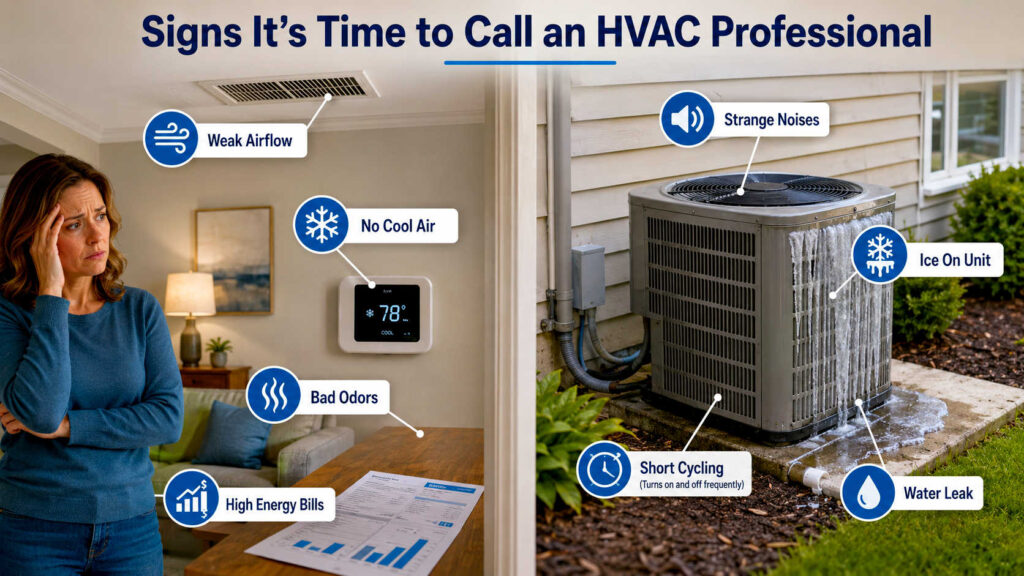
If the system still will not heat or cool after basic troubleshooting, or if you notice a safety-related problem, stop and call a qualified HVAC professional.
Call us if you notice any of these issues:
- Burning smells
- Gas odors
- Repeated breaker trips
- Ice on the system
- Loud mechanical noises
- Water leaks
- Weak airflow
- Short cycling
These problems may worsen quickly and can lead to equipment damage, higher repair costs, or unsafe operating conditions.
Professional HVAC service may include system diagnostics, electrical testing, airflow evaluation, refrigerant checks, ductwork inspection, component repair, preventive maintenance, or replacement recommendations. A trained technician can determine why the system failed and identify the most practical solution based on the equipment’s age, condition, and repair history.
Caprock Services Heating & Air provides HVAC repair, maintenance, and installation services for homes and businesses in Amarillo and surrounding Texas Panhandle communities. The goal is not only to restore heating or cooling, but also to address the cause of the problem and help prevent repeated failures.
Why Local Experience Matters
Texas Panhandle conditions can place unusual demands on heating and cooling equipment. Dust, wind, hail, summer heat, winter cold fronts, and rapid temperature changes can affect airflow, outdoor units, ductwork, furnaces, heat pumps, and air conditioners.
A local HVAC contractor understands how these conditions affect homes and businesses in Amarillo. Caprock Services Heating & Air provides emergency repairs, AC and furnace maintenance, system diagnostics, and complete HVAC support with local weather and comfort needs in mind.
Frequently Asked Questions About HVAC Troubleshooting
1. What is the first thing I should check when my HVAC system stops working?
Check the thermostat first. Confirm that it is set to the correct mode, the temperature setting is appropriate, and the display has power. Then inspect the air filter, circuit breaker, indoor vents, and outdoor unit for obvious problems.
2. Why is my AC running but not cooling my house?
An air conditioner may run without cooling because of a dirty filter, blocked outdoor unit, dirty coils, thermostat problem, low refrigerant, weak airflow, or compressor issue. Start with the filter, thermostat, vents, and outdoor unit. If those checks do not solve the problem, schedule professional AC repair.
3. Why is my furnace blowing cold air?
A furnace may blow cold air because of an incorrect thermostat setting, dirty filter, ignition problem, overheating, gas supply issue, or failing component. Check the thermostat and filter first. If the furnace continues blowing cold air, schedule professional heating service and repair.
4. How often should I replace my HVAC filter?
Check the filter monthly and replace it when it looks dirty or light no longer passes through it easily. Homes with pets, heavy dust, allergies, remodeling activity, or frequent HVAC use may need more frequent filter changes.
5. Why does my HVAC system keep turning on and off?
Frequent on-and-off operation is called short cycling. It may be caused by a dirty filter, airflow restriction, thermostat problem, frozen coil, oversized equipment, refrigerant issue, or electrical problem. If the cycling continues after checking the thermostat and filter, schedule a professional inspection.
6. Is Weak Airflow an HVAC Problem or a Ductwork Problem?
Weak airflow can be caused by either the HVAC system or the ductwork. Common causes include a dirty filter, blocked vents, blower motor problems, dirty coils, leaking ducts, or poor duct design. If airflow is weak throughout the home, the issue may be near the equipment. If only one or two rooms are affected, the problem may be in the ductwork or airflow balance.
7. When should I call for emergency HVAC services?
Call for emergency HVAC service if you smell gas, notice a burning electrical odor, lose heat during freezing weather, lose cooling during extreme heat, see a major water leak, hear loud mechanical noises, or experience repeated breaker trips. Turn the system off when it is safe to do so and seek professional help.
8. Can I troubleshoot a heat pump myself?
You can safely check the thermostat mode, air filter, circuit breaker, vents, and outdoor unit for visible obstructions. Do not open electrical panels, handle refrigerant, bypass safety controls, or attempt internal repairs. If the heat pump still does not heat or cool properly, contact a qualified HVAC professional.
9. Why are some rooms hotter or colder than others?
Uneven room temperatures may be caused by blocked vents, duct leaks, poor insulation, sun exposure, air leaks, inadequate return airflow, or an HVAC system that is not properly balanced for the home. If one or more rooms remain uncomfortable after basic checks, a professional can inspect the ductwork, airflow, insulation, and equipment performance.
10. How do I know if I need HVAC repair or replacement?
Repair may make sense when the system is relatively new, the problem is isolated, and the repair cost is reasonable. Replacement may deserve consideration when the equipment is older, inefficient, unreliable, or requires frequent repairs. A professional evaluation can compare the system’s age, condition, repair history, and expected operating costs.
11. Are professional HVAC maintenance services worth it?
Yes. Professional maintenance can help identify worn parts, airflow restrictions, dirty coils, electrical concerns, and other developing problems before they cause a breakdown. Regular tune-ups may also improve efficiency, support more consistent comfort, and reduce unnecessary strain on the system.
12. Who should I call for heating and air service in Amarillo, TX?
Caprock Services Heating & Air provides HVAC repair, maintenance, diagnostics, and installation services for homes and businesses in Amarillo and surrounding Texas Panhandle communities. A trained technician can inspect the system, identify the cause of the problem, and recommend the most practical solution.
Keep Your Comfort on Track with Smarter HVAC Troubleshooting
HVAC problems can feel stressful, but not every issue begins with a major equipment failure. Homeowners can safely check the thermostat, filter, breakers, vents, return grilles, and outdoor unit before scheduling service.
Stop troubleshooting if you notice gas or burning odors, repeated breaker trips, ice, water leaks, loud mechanical noises, or a complete loss of heating or cooling during extreme weather. These symptoms require professional attention.
Caprock Services Heating & Air provides professional HVAC troubleshooting, repair, maintenance, and installation services in Amarillo and surrounding Texas Panhandle communities. If basic checks do not solve the problem, schedule service to identify the cause and restore dependable comfort.
Need HVAC help in Amarillo? Contact Caprock Services Heating & Air today.
Call 806-646-4822 or fill out the online form to request service.