

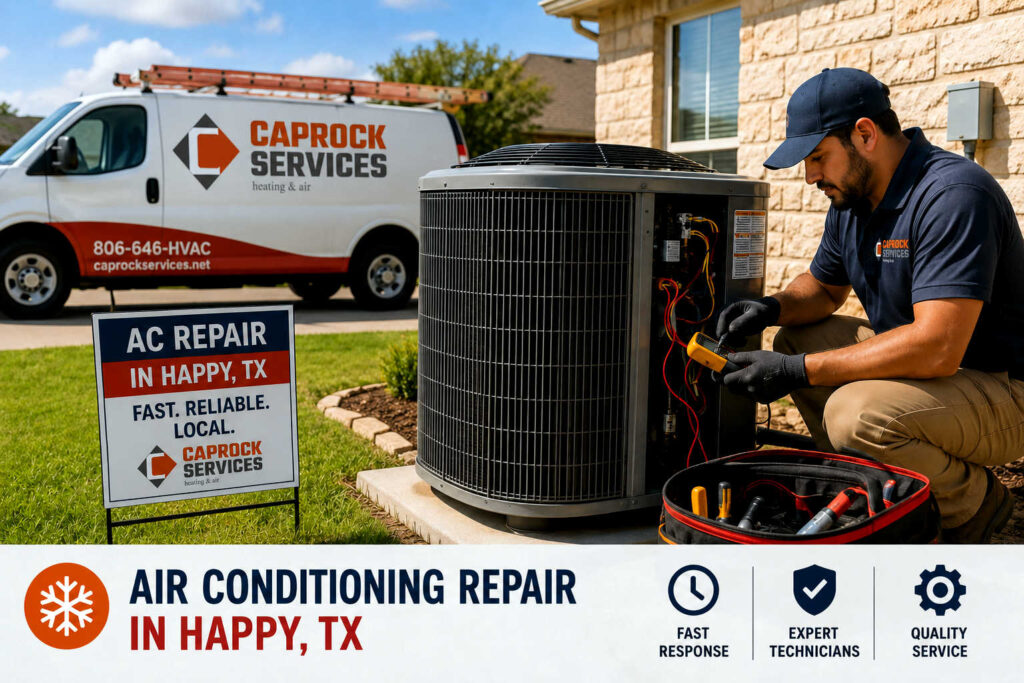
Is your air conditioner running but your Happy, TX home still feels warm? Are you hearing unusual noises, noticing water around the indoor unit, or wondering why your electric bill suddenly increased?
These are all signs that your cooling system may need professional air conditioning repair.
Air conditioners often give homeowners warning signs before they stop working completely. Recognizing those symptoms early can help you address a smaller problem before it becomes a more expensive repair or a complete system breakdown.
Caprock Services Heating & Air provides AC repair in Happy, TX, including help with cooling problems, airflow issues, leaks, compressor problems, and urgent air conditioning failures. Here are some of the most common signs that it is time to have your system inspected.
AC Not Blowing Cold Air
If your AC is not blowing cold air, something is preventing the system from removing heat from your home effectively.
Sometimes the problem is relatively simple, such as an incorrect thermostat setting or a dirty air filter. Other times, an air conditioner not cooling may be caused by:
Restricted airflow
Dirty evaporator or condenser coils
Low refrigerant
A refrigerant leak
Electrical problems
A failing blower motor
Frozen evaporator coils
Compressor problems
If the thermostat is set correctly and the system continues blowing air that is not cold, scheduling professional air conditioner repair is a better option than repeatedly lowering the thermostat.
An HVAC technician can diagnose the source of the cooling problem and determine what needs to be repaired.
Why Is My AC Blowing Warm Air?
An AC blowing warm air is one of the clearest indications that the cooling system is not operating properly.
First, make sure your thermostat is set to COOL and that the temperature is set below the current indoor temperature. If those settings are correct and warm air continues coming from the vents, the problem may be inside the HVAC system.
Possible causes include low refrigerant, restricted airflow, dirty coils, electrical problems, or compressor trouble.
Warm air coming from the vents does not necessarily mean the entire air conditioner needs to be replaced. A professional diagnosis can determine whether an AC repair can restore proper cooling.
Weak or Uneven Airflow From the Vents
Your air conditioner needs adequate airflow to distribute cooled air throughout your home.
If very little air is coming from the vents, or some rooms receive much more airflow than others, there may be a problem with the filter, blower assembly, ductwork, or another component.
Common causes of poor airflow include:
Clogged or dirty air filters
Blocked or damaged ductwork
Blower motor problems
Dirty evaporator coils
Frozen coils
Closed or obstructed vents
Air handler problems
Poor airflow can make your home uncomfortable while also forcing the system to run longer in an attempt to reach the thermostat setting.
If replacing a dirty filter does not improve airflow, professional AC service and repair may be necessary.
AC Leaking Water
An AC leaking water should not be ignored.
Air conditioning systems naturally remove moisture from indoor air. That moisture normally drains away through the condensate system. When something prevents proper drainage, water can collect around the indoor equipment.
Possible causes include:
A clogged condensate drain
A damaged drain pan
A frozen evaporator coil
A dirty air filter restricting airflow
Drainage system problems
Water around the HVAC equipment can eventually damage flooring, drywall, ceilings, or nearby building materials.
If you see water collecting around your air conditioner, turn your attention to the problem before the leak becomes more extensive.
Refrigerant Leak Warning Signs
Refrigerant is essential to the cooling process because it allows the air conditioner to absorb heat from inside your home and release it outdoors.
An air conditioning system should not routinely lose refrigerant. If refrigerant levels are low, there may be a leak somewhere in the system.
Signs that you may need refrigerant leak repair include:
AC not blowing cold air
Long cooling cycles
Ice forming on refrigerant lines or coils
Hissing or bubbling sounds
Higher electricity usage
Difficulty maintaining the thermostat setting
Simply adding refrigerant without addressing the source of a leak does not correct the underlying problem.
A qualified HVAC technician can inspect the system, identify the source of the refrigerant loss, and determine the appropriate repair.
Loud or Unusual AC Noises
Air conditioning systems normally make some noise when they start, run, and shut down. New or unusually loud sounds, however, can indicate a mechanical or electrical problem.
Pay attention to sounds such as:
Banging
Clanking
Grinding
Squealing
Buzzing
Rattling
Whistling
Hissing
Different noises can point to different problems. A rattling sound could involve a loose component, while grinding or squealing may indicate a motor or bearing problem. Buzzing can sometimes be associated with an electrical issue.
Continuing to operate equipment with a damaged component can sometimes lead to additional wear or failure.
If your AC suddenly begins making a sound you have never heard before, having the system inspected is a sensible precaution.
Signs of an AC Compressor Problem
The compressor is a major component of your air conditioning system. It helps circulate refrigerant and makes the cooling process possible.
Potential signs of compressor trouble include:
Warm air from the vents
Difficulty starting the AC
Repeated circuit breaker trips
Unusual noises from the outdoor unit
The outdoor unit vibrating excessively
The system running without adequately cooling the home
Not every cooling problem is caused by the compressor, so professional diagnosis is particularly important before assuming expensive AC compressor repair is necessary.
Electrical components, capacitors, refrigerant problems, and airflow restrictions can sometimes produce similar symptoms.
AC Not Working at All
If your AC is not working, check a few simple things before scheduling service.
Make sure the thermostat is powered and set to COOL.
Check whether the circuit breaker has tripped.
Inspect the air filter and replace it if it is excessively dirty.
Make sure supply and return vents are open and unobstructed.
If the system still does not operate, avoid repeatedly resetting breakers or attempting electrical repairs yourself.
A complete loss of cooling can involve thermostat failure, electrical problems, a failed capacitor, motor problems, compressor issues, or other equipment failures that require professional diagnosis.
Higher Utility Bills and Decreased Cooling Efficiency
A rising electric bill does not automatically mean something is wrong with your air conditioner, but an unexplained increase combined with poor cooling performance can be a warning sign.
As components become dirty, damaged, or worn, the air conditioner may need to run longer to achieve the same level of comfort.
Problems that can reduce cooling performance include:
Dirty coils
Restricted airflow
Worn components
Low refrigerant
Duct leakage
Motor problems
Mechanical or electrical issues
If your system seems to run constantly or cooling costs have increased while indoor comfort has decreased, an HVAC inspection can help determine whether air conditioner repair service is needed.
Frequent Cycling or an AC That Runs Constantly
Air conditioners normally cycle on and off throughout the day.
A system that repeatedly starts and stops within short periods may be short cycling. An AC that runs almost continuously without reaching the thermostat setting can indicate a different type of problem.
Either condition can point to issues such as:
Thermostat problems
Restricted airflow
Dirty coils
Incorrect system operation
Refrigerant problems
Electrical issues
Equipment that is struggling to satisfy the cooling demand
Frequent cycling also creates additional wear on system components.
If the cycling pattern of your air conditioner suddenly changes, professional AC repair services can help identify the cause.
When Do I Need Emergency AC Repair?
Some air conditioning problems can wait for a regularly scheduled service appointment. Others require faster attention.
Consider calling for emergency AC repair when:
Your air conditioner completely stops cooling during extreme heat
You smell something burning or electrical
The system repeatedly trips a breaker
You hear severe mechanical noises
Electrical components appear damaged
The equipment is creating an immediate safety concern
There is significant water leakage that could damage the home
When safety is involved, shut the equipment off and contact a professional rather than continuing to operate it.
Caprock Services offers 24 hour AC repair and emergency HVAC service for urgent cooling problems in the Amarillo area and surrounding Texas Panhandle communities.
Should I Repair or Replace My Air Conditioner?
Not every AC problem means you need a new system.
Many common cooling problems can be corrected through air conditioning repair, particularly when the equipment has otherwise been operating reliably.
Whether repair or replacement makes more sense depends on factors such as:
The age of the system
The type of repair needed
The condition of other major components
Previous repair history
Energy efficiency
How consistently the system cools the home
The cost of the repair compared with the remaining useful life of the equipment
A professional HVAC technician can explain what is wrong with the system and provide repair options so you can make an informed decision.
How Can I Reduce the Risk of Future AC Repairs?
Routine HVAC maintenance can help identify developing problems and keep the system operating properly. The U.S. Department of Energy also recommends proper HVAC filter installation and regular maintenance to support system performance.
Homeowners can also help their cooling systems by:
Changing air filters regularly
Keeping supply and return vents unobstructed
Keeping vegetation and debris away from the outdoor unit
Watching for unusual sounds or odors
Paying attention to changes in cooling performance
Scheduling professional HVAC maintenance
Addressing minor cooling problems early can sometimes prevent additional damage and more expensive repairs.
Air Conditioning Repair for Happy, TX Homes
Living in the Texas Panhandle means your air conditioner can spend long periods working to keep your home comfortable during hot weather. When cooling performance changes, waiting until the system stops completely can leave you dealing with a much larger problem at the worst possible time.
Whether your AC is not blowing cold air, your AC is leaking water, the system is making strange noises, or your air conditioner is not cooling the house evenly, Caprock Services Heating & Air can inspect the equipment and determine what is causing the problem.
Our technicians provide air conditioning repair in Happy, TX and help homeowners address everything from common cooling problems to urgent system failures.
Frequently Asked Questions About Air Conditioning Repair in Happy, TX
Why is my AC not blowing cold air?
An AC that is not blowing cold air may have restricted airflow, a dirty filter, low refrigerant, a refrigerant leak, frozen coils, electrical problems, or compressor trouble. If the thermostat is set correctly and the system still is not cooling, professional air conditioning repair can help identify the cause.
Why is my AC blowing warm air?
Warm air from the vents may be caused by thermostat settings, restricted airflow, dirty coils, low refrigerant, electrical issues, or compressor problems. If the thermostat is set to COOL and the issue continues, the system should be inspected by an HVAC professional.
Why is my AC leaking water?
An AC may leak water because of a clogged condensate drain, frozen evaporator coil, damaged drain pan, dirty filter, or another drainage problem. Water around HVAC equipment should be addressed promptly to reduce the risk of damage to nearby flooring, walls, or ceilings.
What are the signs of a refrigerant leak?
Possible signs of a refrigerant leak include poor cooling, long cooling cycles, ice on refrigerant lines or coils, hissing or bubbling noises, rising utility bills, and difficulty maintaining the thermostat setting. A trained HVAC technician should locate and repair the leak.
What are signs of an AC compressor problem?
Signs of compressor trouble may include warm air from the vents, difficulty starting the AC, repeated breaker trips, unusual noises from the outdoor unit, excessive vibration, or a system that runs without adequately cooling the home. Because other problems can cause similar symptoms, professional diagnosis is important.
When do I need emergency AC repair?
Emergency AC repair may be appropriate if the system stops cooling during extreme heat, repeatedly trips a breaker, produces a burning or electrical smell, makes severe mechanical noises, has damaged electrical components, or creates a significant water leak or other safety concern.
Should I repair or replace my air conditioner?
The decision depends on the age of the system, repair history, efficiency, condition of major components, the type of repair needed, and the cost of repair compared with the remaining useful life of the equipment. A professional diagnosis can help homeowners compare their options.
Who provides air conditioning repair in Happy, TX?
Caprock Services Heating & Air provides air conditioning repair for homes and businesses in Happy, TX and surrounding Texas Panhandle communities. Services include AC diagnostics, cooling repairs, emergency HVAC service, maintenance, and other heating and cooling services.
Schedule AC Repair in Happy, TX
If something about your air conditioner does not seem right, you do not have to wait for the system to stop working completely.
Caprock Services Heating & Air provides professional heating and air conditioning services in Happy, TX and surrounding Texas Panhandle communities.
For urgent cooling problems, 24/7 emergency HVAC service is available.
Call (806) 646-4822 or schedule an appointment with Caprock Services Heating & Air to have your cooling system inspected.